Welcome back to Frank’s Favorites, my own little corner of the internet where I get to share some of the comics that have meant the most to me over my three-and-a-half (or so) decades of reading. I hope that by sharing these, I help you find a new favorite book—or at least have a good time with one…
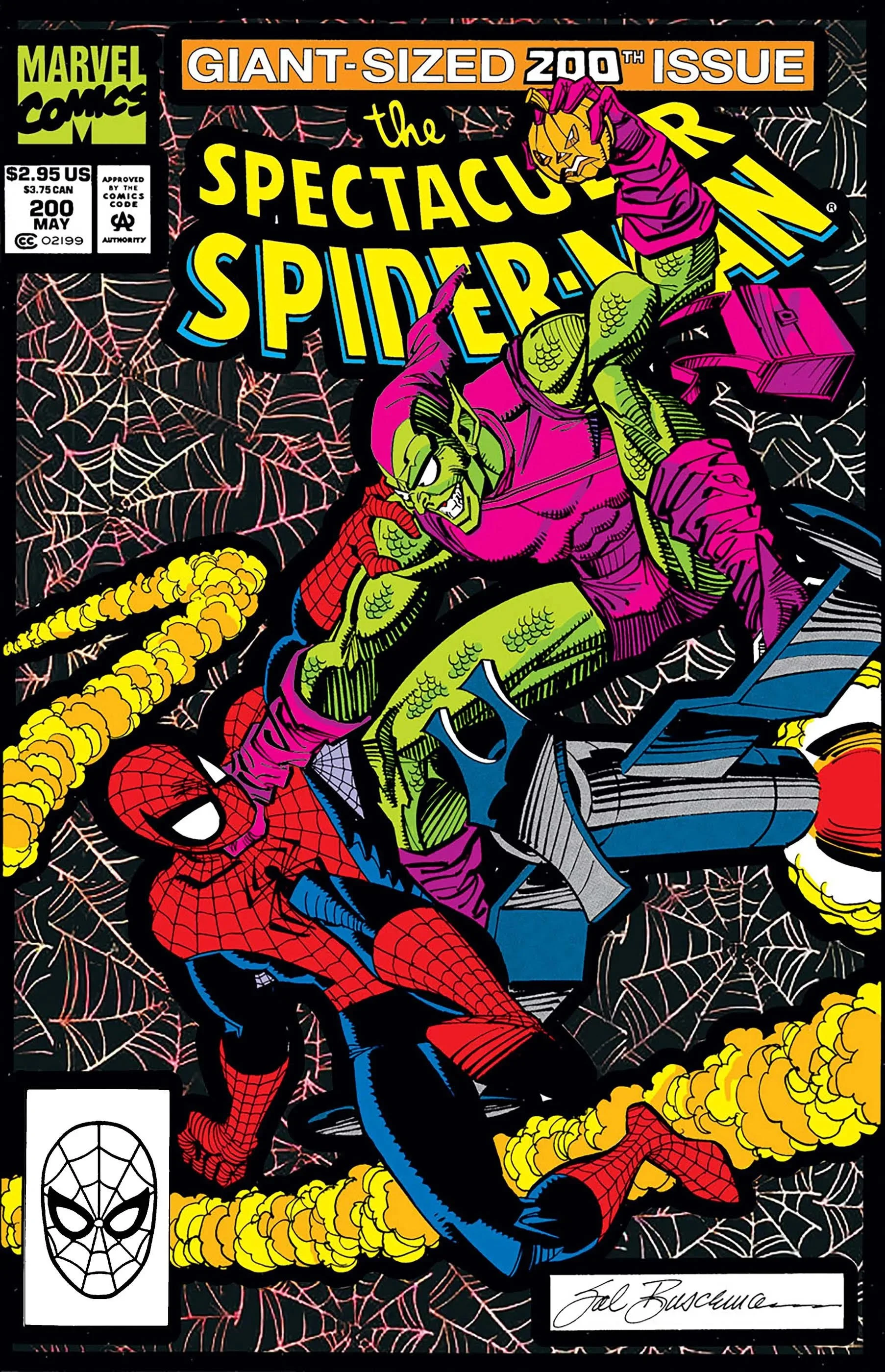
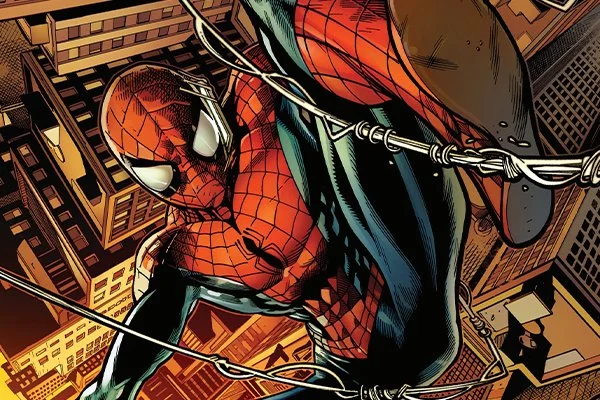
I'm a huge Spider-Man fan.
I know, that's easy to say right now when Spider-Man: Brand New Day is breaking all kinds of box office records. Right now, everyone is a Spider-Man fan—and rightly so.
The ol' Web-Head and I go way back, though. In fact, if I had to do the whole "desert island" thing and only pick one character to be able to read about, it would be Spider-Man.
One of the things that I think makes the Brand New Day movie work so well is that it's able to really capture the core of the character. The sense of responsibility that says he must help everyone he can, no matter what the cost to himself. The feelings of loneliness that such a life would inevitably cause, even if you do have someone you truly care about. The struggle against the personal darkness within.
The comics run that I immediately compared the movie to in my head, just based on those kinds of themes, was J.M. DeMatteis and Sal Buscema's run on Spectacular Spider-Man. Running from 1991 to 1993, their run spanned issues #178 through #200, with their final three issues, #201 through #203, being part of the Maximum Carnage crossover. Twenty-three issues might not seem like a very long run, but they made the absolute most of it.
There are really four main characters for this run: Peter Parker, Harry Osborn, Vermin, and Doctor Ashley Kafka. Among the major themes are repressed traumas, family—both the ones we get and the ones we make for ourselves—and legacy.
Our Scars Remind Us
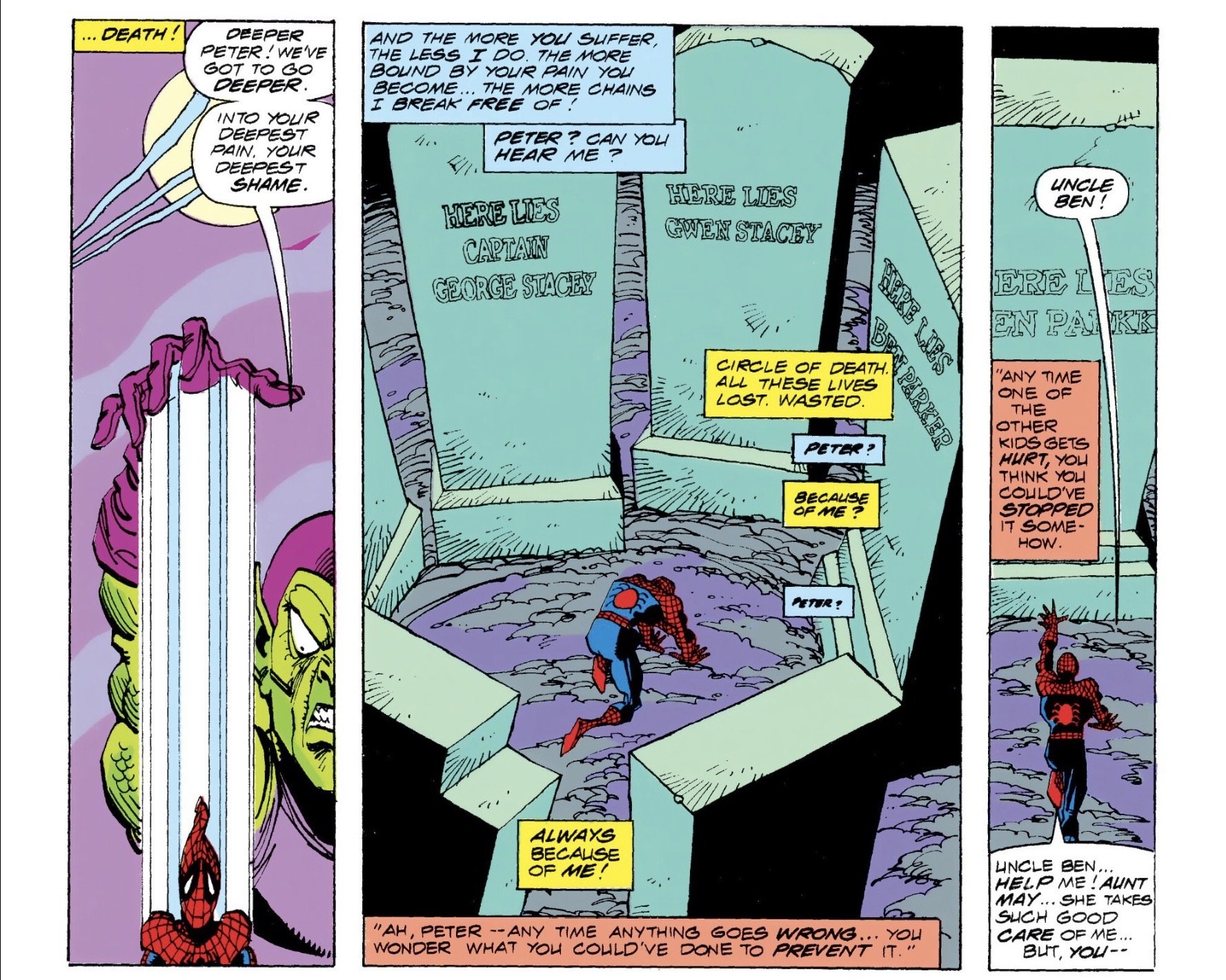
When the first story arc of this run, The Child Within, started in issue #178, I was ten (almost eleven) years old. The comics I had read up to that point were things like G.I. Joe and Transformers. I don't even remember what possessed me to pick this issue up. Up to that point, my main exposure to Spidey had been through my many action figures. What I found was a book that was much heavier than I was used to, but it was counterbalanced by Sal Buscema's clean and inviting art style. If I'm being honest, most of the themes presented in this story were well beyond young me. But even at that early age, I hated leaving things unfinished, so since the cover said "Part 1 of 6," I was going to get the whole thing, darn it.
Even though the main storyline of this first arc is focused on Vermin—a tragic character if ever there was one—we also get glimpses of where the rest of the run is headed. Peter is still dealing with the trauma of having been buried alive by Kraven the Hunter for two weeks, only for the man to commit suicide shortly thereafter. As you can imagine, Pete's not too big on giving Vermin the benefit of the doubt like Doctor Kafka wants him to. A monster is a monster, after all, no matter how they got that way. Right? Speaking of monsters, Peter's best friend Harry Osborn can't even watch TV with his young son Norman without seeing visions of his late father telling him what a "weakling" and "disappointment" he is. They don't get much more monstrous than Norman Osborn, and the later generations of his family are set to pay the price for his actions.
As Doctor Kafka continues to work with Vermin, Spider-Man remains skeptical and unable to see anything but the monster without. It's through Kafka's time with Vermin that she's able to find the child within him—confused, abused, and scared. One of the central conflicts of this story arc is "Can Spider-Man look past the monster he sees when he looks at Vermin, and see the boy Edward that he once was?" At the same time, Harry Osborn could use some therapy sessions himself. The visions of Norman keep appearing to him, and soon he's seeing visions of Peter—dressed as Spider-Man but without the mask—as well. Harry spirals out of control, even attacking the visions at one point. As for the real Peter, he's taken a little trip down Memory Lane to try centering himself again. After a stop at the cemetery where he visits the graves of his parents and his Uncle Ben, he swings by Aunt May's house to check in on her. Finally feeling more like himself, he heads home to his wife, Mary Jane. Too bad the sins of the past are waiting for him there, as he finds himself facing the Green Goblin—Harry!
Best Friends and Mortal Enemies
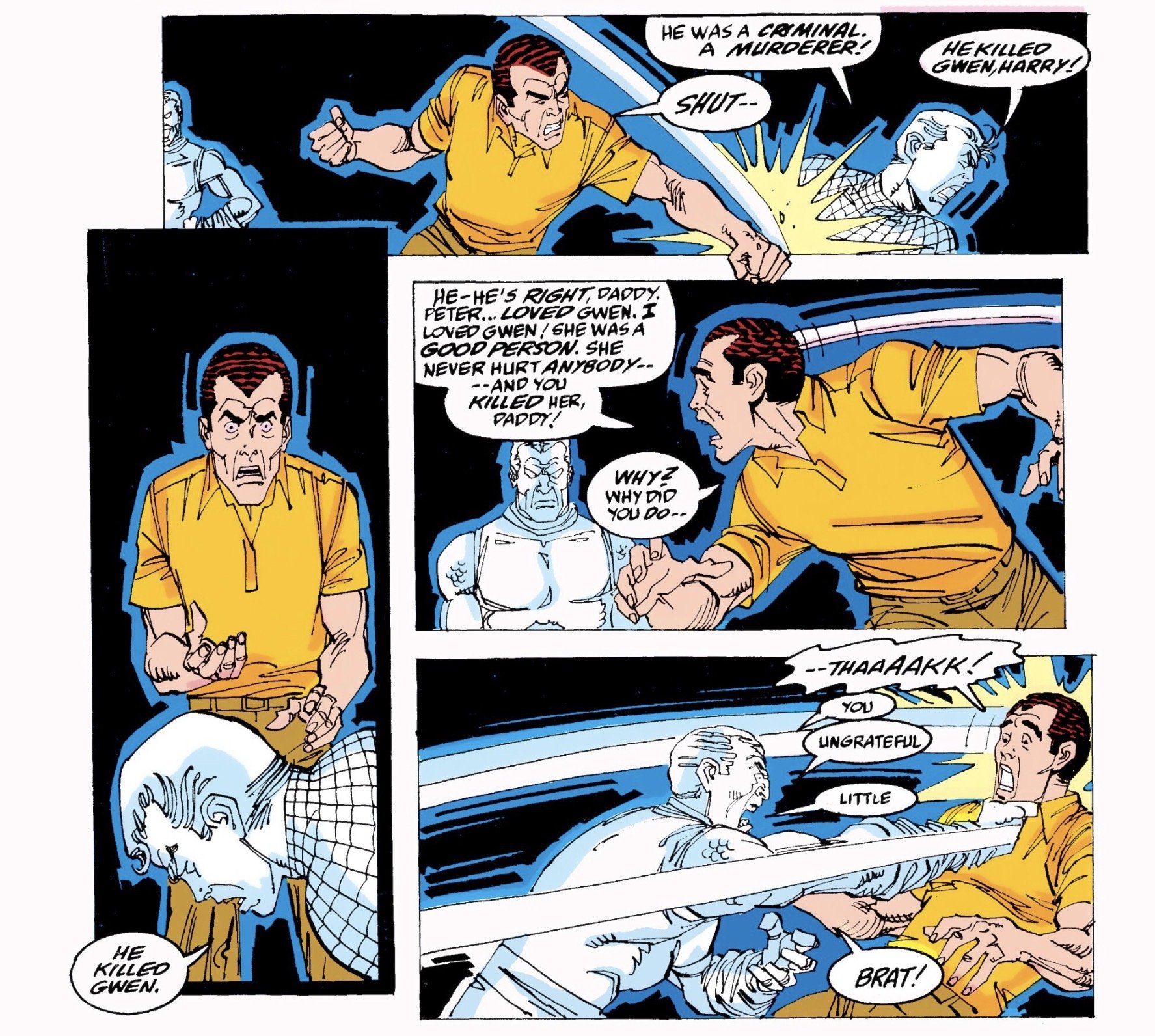
Now we come to the crux of this Spectacular Spider-Man run. Vermin and The Child Within are the starting point, but at the end of the day, the heart of these twenty-three issues is Peter Parker and Harry Osborn. Spider-Man and the Green Goblin. Best friends and mortal enemies. Which will they be when the dust settles? Does the conflict with this Green Goblin have to end the same way as Peter's conflict with the first Goblin—Harry's father Norman? Or can these two men confront their demons and break the cycle?
I've had several best friends throughout my life. Sometimes they move away and we lose touch. Sometimes we become different people as we grow up and drift apart. I'm happy to say that, thankfully, none of them ever became a super-villain and tried to kill me. Because of that, I feel like I both can and can't relate to Peter and Harry's relationship. I was one of the first of my group of friends to get married and have kids. That absolutely changed my dynamic with the group as a whole. Harry has little Norman, whom everyone calls "Normie." Coincidentally, that's the one thing he'll never be, having that name in that family… Peter and Mary Jane don't have children. So there's automatically a gap between these two families. Add to that Peter's secret identity and the truth of just how broken Harry really is, and you have a recipe for tragedy. Which is just what we ultimately get.
Even though I keep calling them friends, Peter and Harry are really more like brothers. They've survived secret lives, drug addictions, more death than anyone their ages should ever have to deal with—and they're still standing. A bit worse for wear, as we learn throughout this run, but still standing nonetheless. Because of all they've been through, their bond is probably closer than that of some sibling relationships. Which makes it all the more tragic when the ghost of Norman Osborn and his "style" of parenting rears its ugly head and drops a Pumpkin Bomb in the middle of everything. Two families' lives were shattered because of the actions of one man who had been dead and buried for years. Relationships that will literally never recover. And worst of all, passing these sins onto the next generation, ensuring that the cycle will just continue on.
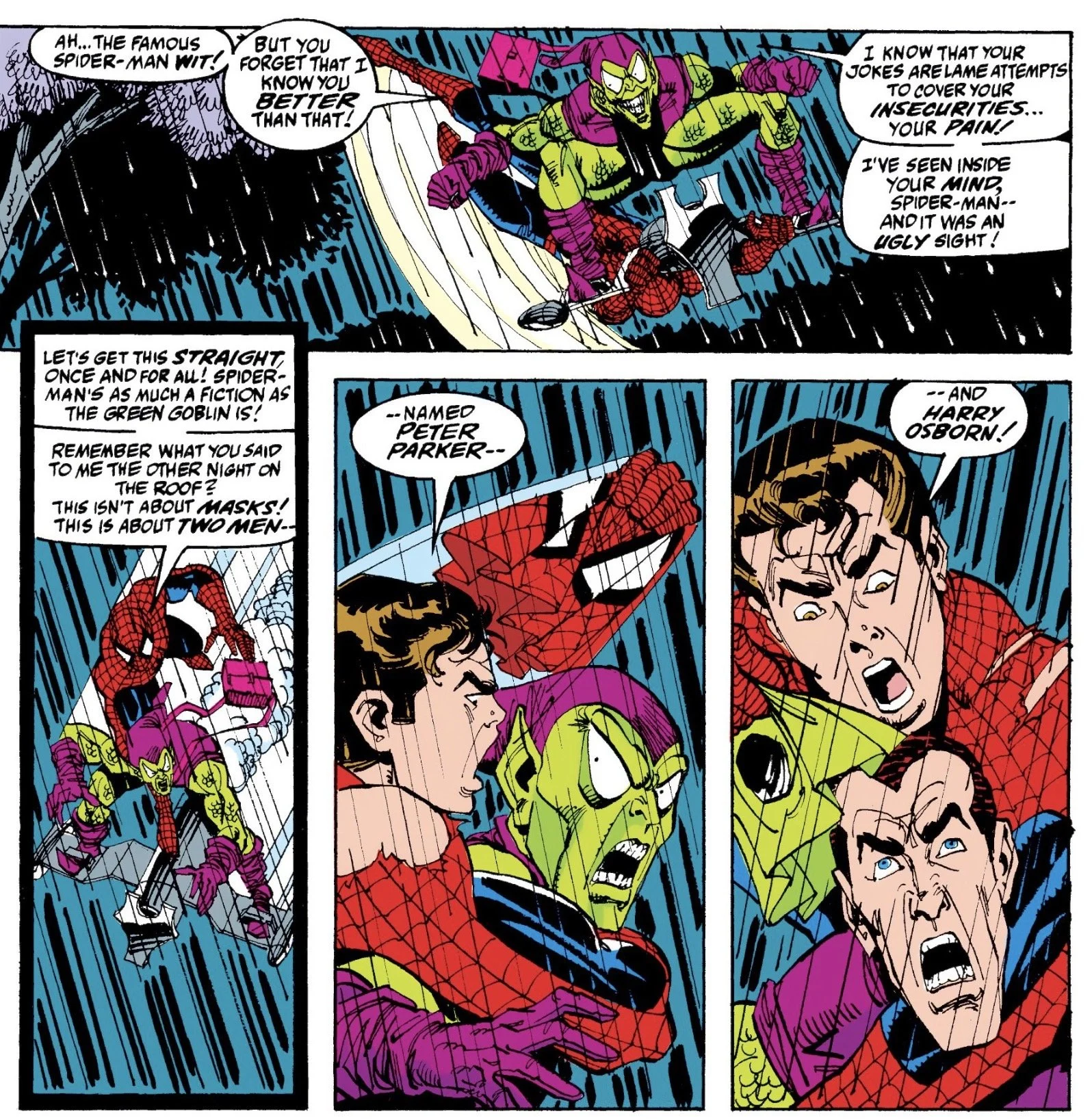
J.M. DeMatteis doesn't shy from delving deep into the characters' psyches throughout this run. The first time Harry confronts Peter as the Green Goblin, he uses one of Norman's gases on him that makes Peter face his traumas. Being buried alive by Kraven is first, but it goes back further than that. Peter ends up confronting his feelings of abandonment coming from his parents’ dying when he was a young boy. It takes some time, and a literal breakdown, but Harry actually ends up doing Peter a favor. When Peter tries to do the same for his friend by reminding him what a horrible person Norman Osborn really was, Harry doubles down on his insistence that his father was a good man and Spider-Man is the villain. But even still, when it comes down to it, Harry can't pull the trigger. Not yet. Instead, he leaves Peter with the knowledge that his best friend knows his greatest secret and could choose to reveal it at any time. How can he or Mary Jane be safe when Spider-Man's greatest enemy is literally living in the apartment below them? And what about Aunt May? Harry Osborn wouldn't dare hurt her—but what about the Green Goblin?
Although the heart of this run is the conflict between Spider-Man and the Green Goblin, we take several detours along the way. Some of them, such as the Funeral Arrangements arc, where the Vulture learns he is dying and becomes obsessed with settling old scores, or a short arc featuring the Puma and delving into how hard it can be not to surrender to rage, fit the central themes of trauma and legacy. Others, like team-ups with Frog-Man and the original five X-Men, are notably lighter in tone and help to break up the heavier concepts of the run. But after every little detour, we always find ourselves coming back to Vermin or Harry Osborn. Harry descends deeper and deeper into madness, ultimately terrorizing not only Peter's family but also his own. He starts imparting "words of wisdom" to young Normie that sound like the kinds of things that Norman would have said, and before long, you can see the effect they're having on the child. After a disturbed and macabre "dinner party" for both the Parkers and the Osborns, Harry ends up institutionalized. But it's clear he's already too far gone. It all comes to a head in the final proper issue of the run, #200. This is where we witness the definitive confrontation between Spider-Man and Harry Osborn Green Goblin.
Friends to the End
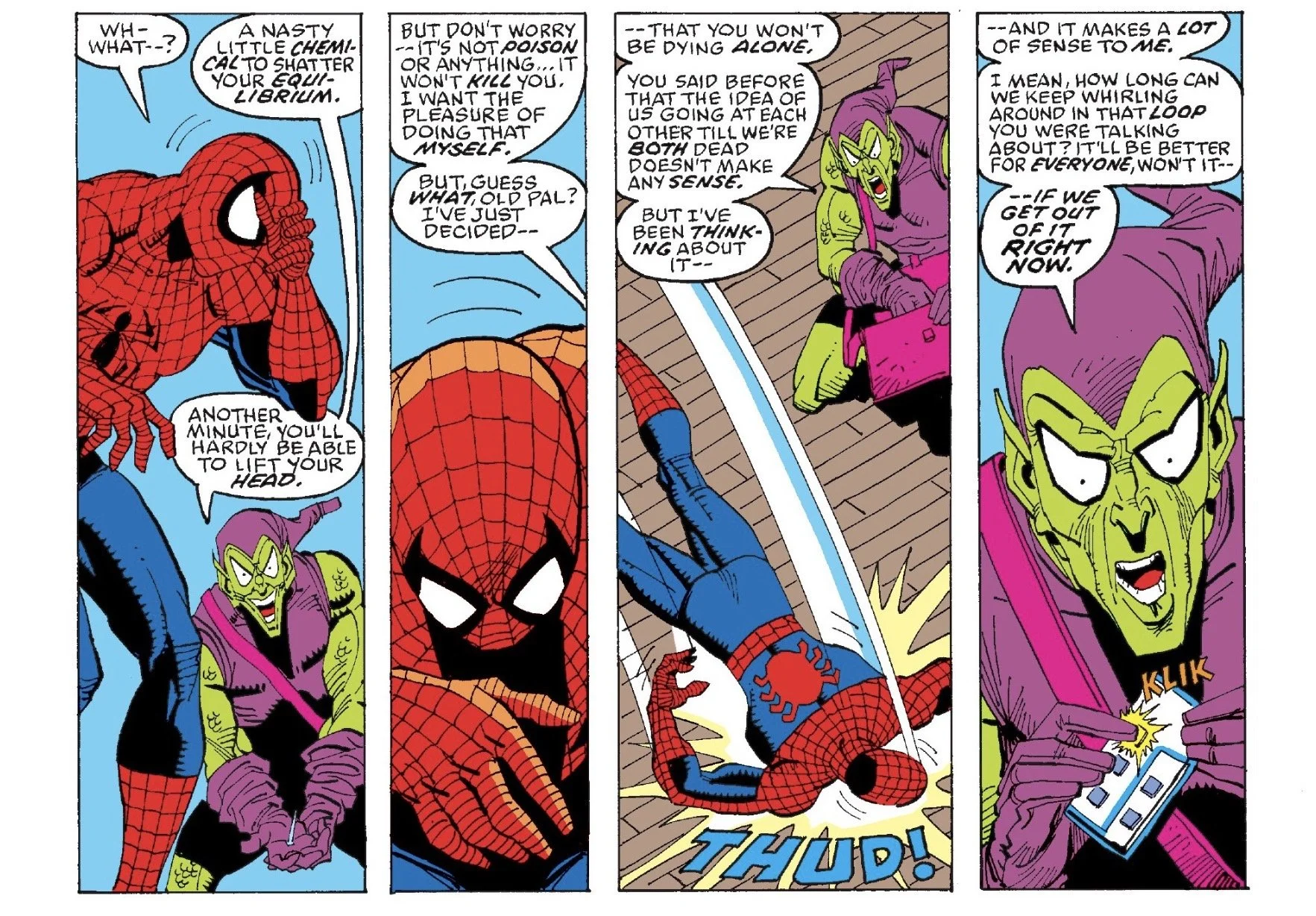
I need to give a word of warning here. There is no way I can talk about issue #200—the culmination of this whole run, and arguably one of my favorite single issues of any comic book—without spoiling things. The issue is 33 years old, so I feel less bad about it than I would something published last week, but I still wanted to give you a heads up.
Harry has been released from the asylum, since the Green Goblin didn’t actually commit any crimes (I’m sure the Osborn fortune helped, too). As the Goblin, he snatches Mary Jane off the street and takes her to the bridge where his father killed Gwen Stacy. After trying to convince her that Peter is the villain of their story, he promises that he would never hurt her. Peter returns home to find Harry waiting with MJ, and he reacts without thinking. He strikes Harry with more force than he should ever hit a normal man. Fortunately, Harry is no longer normal, having taken an experimental version of the original Goblin Formula.
After that meeting, Harry takes to spending all his time in the Green Goblin garb. He continues to stalk Peter, who finds it harder and harder to hold back his rage. Harry announces a charitable foundation, the Norman Osborn Foundation, to open in the former Osborn home.
Finally, Peter can’t take it anymore and confronts Harry at the Foundation. They fight to a standstill until Harry injects Peter with a drug that paralyzes him. He then reveals that the building is rigged with explosives, and he plans to bring their saga to a close. They are interrupted by the security feed showing Mary Jane bringing Normie to see his dad. Harry races on his Goblin Glider to get them out of the building. MJ asks if he’s just going to leave Peter, and you can see the conflict in Harry’s face as he struggles to decide. Finally, he does rescue Peter just before the building explodes.
As MJ thanks him for saving her husband, Harry collapses. Turns out the experimental formula was far from perfect. Harry tells Peter that he’s his best friend as he’s being loaded into an ambulance. The last several pages of this issue are completely without dialogue, but it’s not needed. Harry Osborn has died. Peter Parker has lost both his best friend and his greatest enemy all at once.
With Great Power…
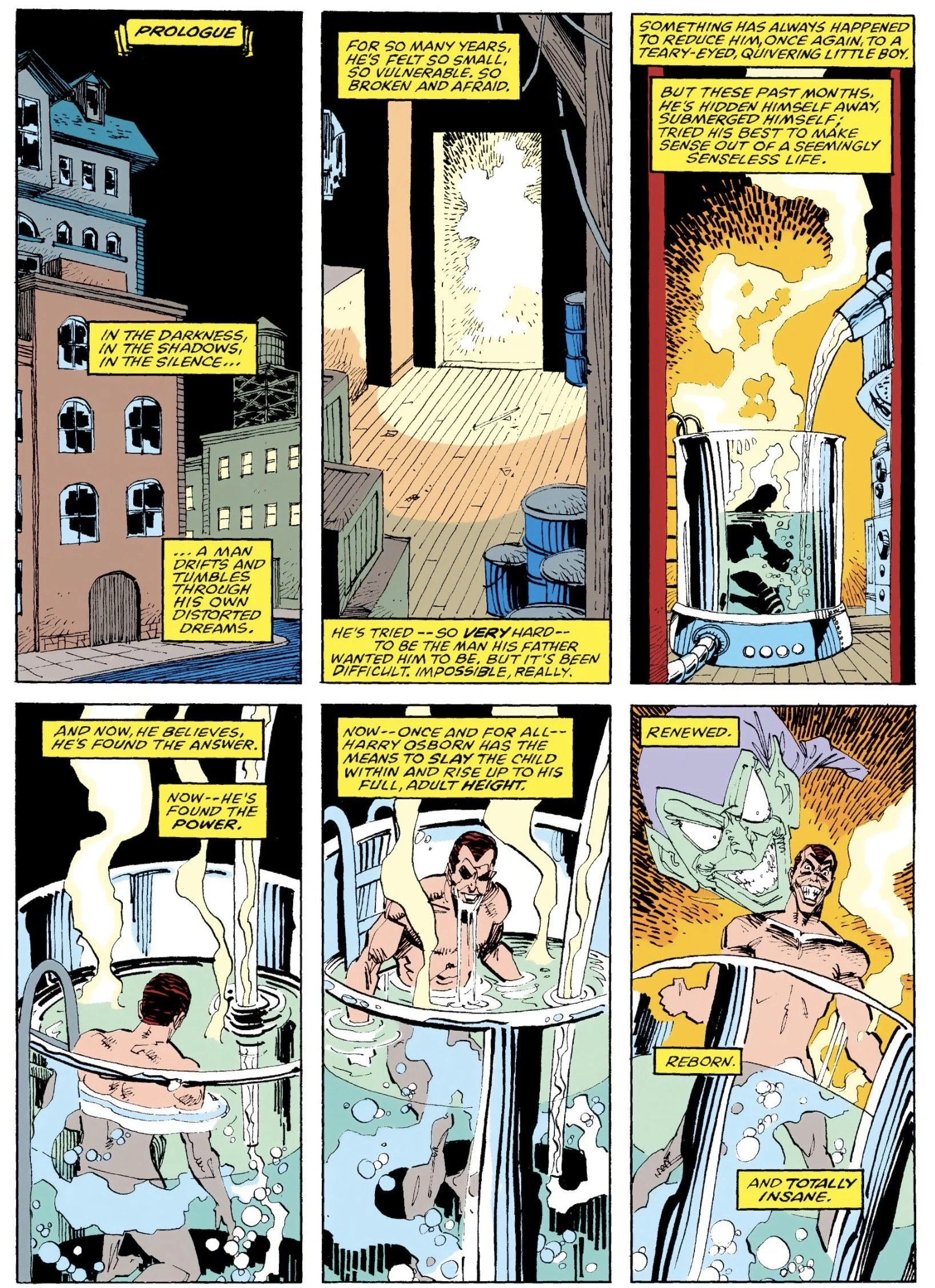
When issue #200 was released in May 1993, I was 12 and soon to be 13 years old. I was also all-in on Spider-Man, reading all of his ongoing series at that time. This issue hit me hard even back then. I’d spent the past two years getting to know these characters, to see them fight against each other as well as their own demons. Where Peter usually won, Harry did the opposite. He descended further and further into madness until he threatened to destroy everything around him. In the end, he made the right choice—but it cost him his life. Even at 12 years old, I knew I was reading something that was a whole lot richer and heavier than your standard comic book.
I’m an adult now, with a family of my own. The difference in perspective that gives me shows this issue, and really this whole run, in a whole other light. I have great parents—they did everything in their power for my brothers and me. They still do, even now, so I can’t relate to either Peter or Harry from that perspective. But because I have children, I’m constantly worried about whether I’m doing right by them and just what I’m passing down to them that they might one day pass to children of their own. I’ve made and lost friends, and so the death of Harry hits me harder now than it did then.
…Comes Great Responsibility
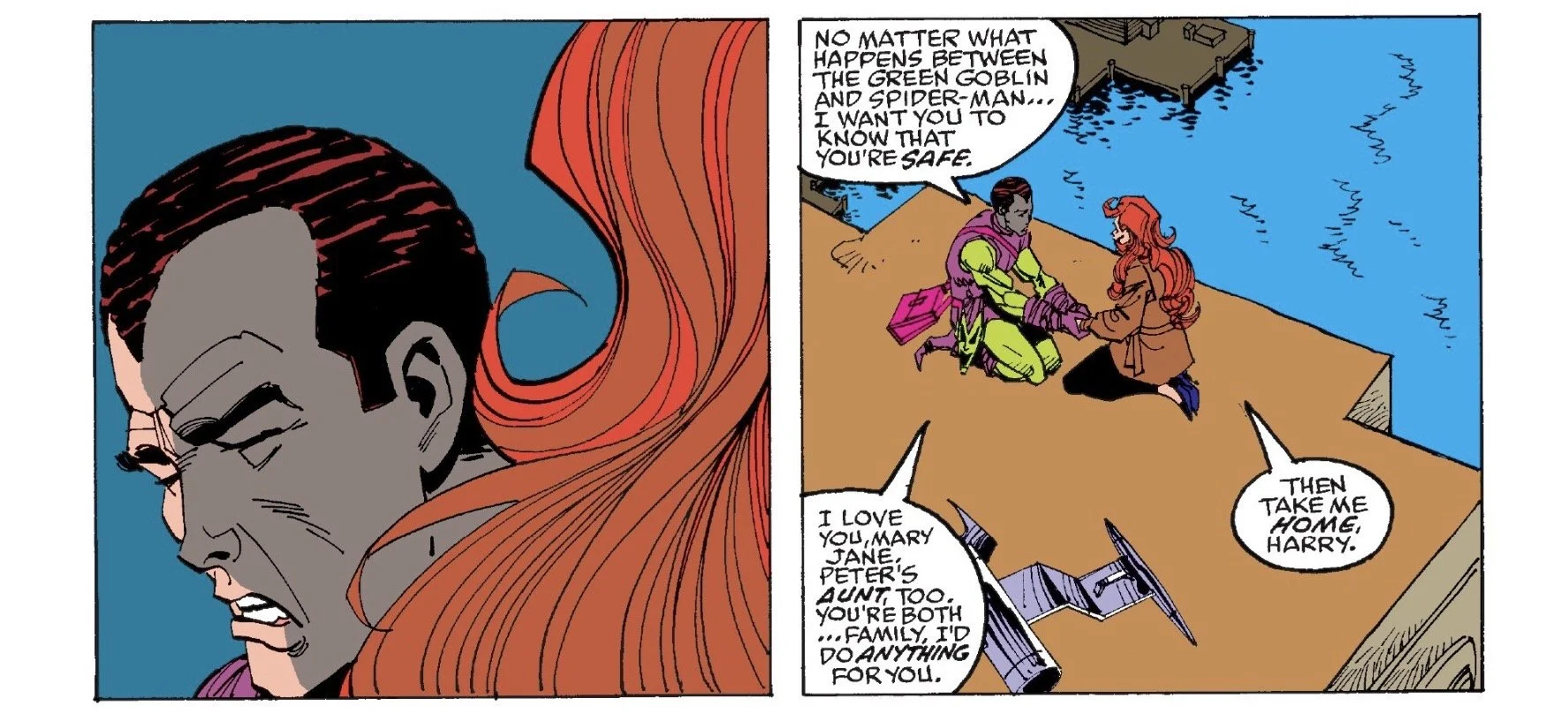
We’re in a golden age of comics right now. There are books being made now about characters and topics that 12-year-old me could only have dreamed of. So it says a lot that a relatively short Spider-Man run from over thirty years ago has stuck with me as it has.
I don’t think this run could have worked without its core creative duo. J.M. DeMatteis brought such depth and maturity to the writing, never taking the easy way out on difficult subjects. His characters acted like adults, not children playing dress-up. Of course, the very nature of superhero comics says there was some of that too, but always in a way that served the characters and their stories. Sal Buscema is considered legendary for a reason. His artwork was very classic-style and lacked the dark edge you’d expect from this kind of story. But that dichotomy is why it worked. He mixed splash pages with nine-panel grids, and there was never a moment when you questioned what was on the page. I think one of the things that gets lost in today’s flashier art styles is nonverbal storytelling and facial expressions. Buscema was a master of this—I can think of only a handful of artists today that could be trusted with a multi-page sequence that depicts the death of a major character without a single caption or line of dialogue.
'Nuff Said
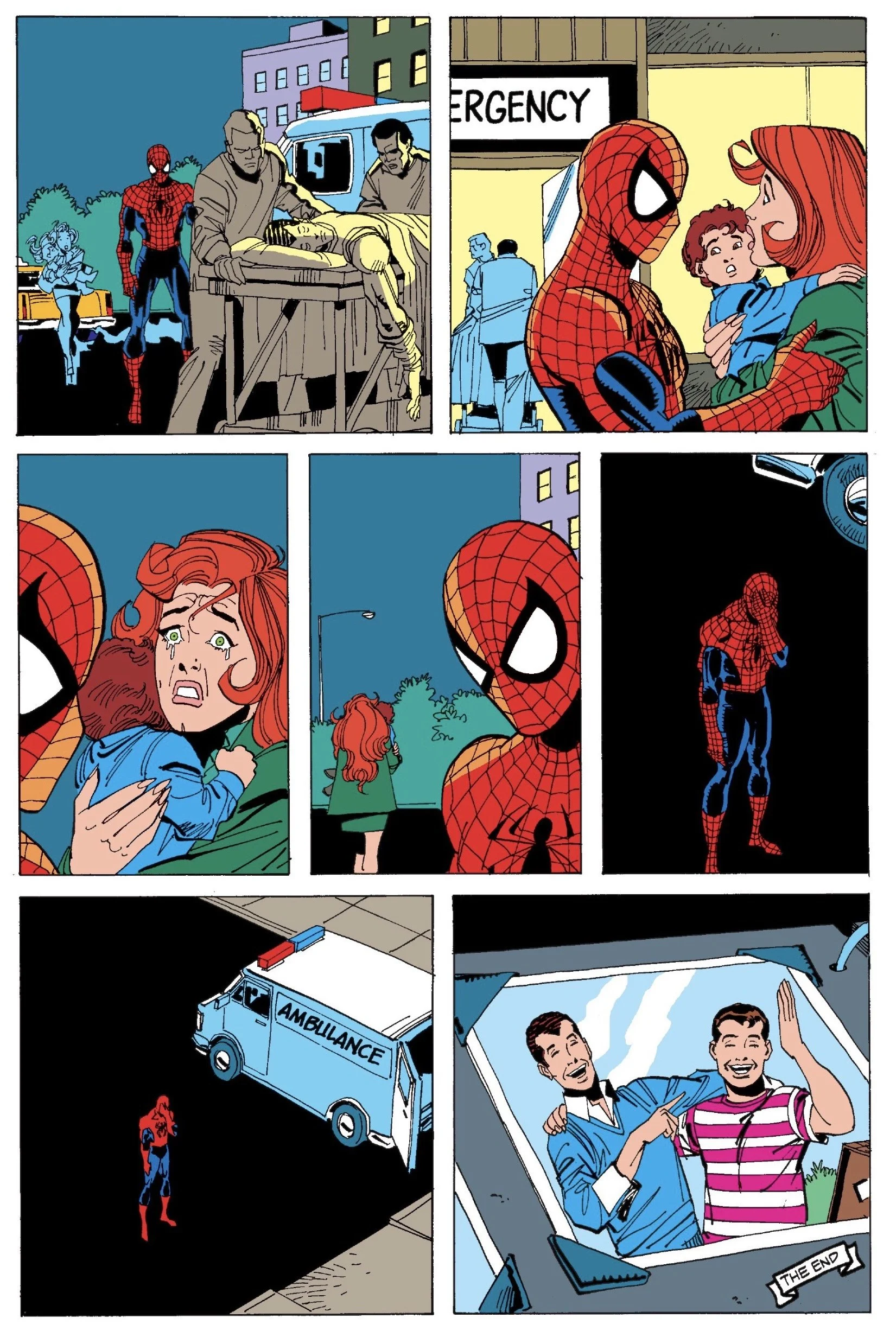
As I said at the beginning, I’m a huge Spider-Man fan. He’s had more incredible runs and fantastic creators than I could ever hope to remember. Timeless stories that I read over and over again. But not all of them are memorable in the way that the 1991-1993 run on Spectacular Spider-Man was. Will we see other Spider-Man stories appear in future issues of Frank’s Favorites? Probably. But they won’t be at the level of this run. And that’s okay. If there were more runs that had the same impact on me as this one, then maybe none of them would be as special.
If I’ve convinced you to check this run out, you should still be able to find the beautiful (but expensive) complete omnibus collection in stores. The issues are all available digitally, either through Comixology or Marvel Unlimited. And I’m sure you could find a majority of them if you went diving through some back issue boxes, although I’m guessing you won’t find #200 in the dollar box. All told, it might take a few bucks or a bit of effort to compile the full run—but believe me, it’s worth it.